Mallorca – a Sea of Attractions and a Paradise for Travellers
I like to be well-prepared before setting off on a trip, as for me, it’s an inseparable part of the journey itself. I sit down with my notebook, browse maps, read travel guides, and look at photos — and in my mind, I’m already there. Planning feels like the first stage of every adventure, a journey that begins even before leaving home. When I finally arrive at my destination, everything I had read about takes on a real shape, turning anticipation into reality. It’s always the highlight of the experience — emotions that are truly hard to put into words.
But no matter how much you plan, every destination has its surprises. Mallorca may be a small island, yet it hides an incredible variety of attractions — from golden beaches to the mountain trails of the Serra de Tramuntana, from historic towns to modern resorts. My preparations went smoothly (and I’ve gathered all the essential information in this post, so it will be even easier for you). Still, I quickly learned that Mallorca has a magic of its own — one that goes far beyond any expectations.
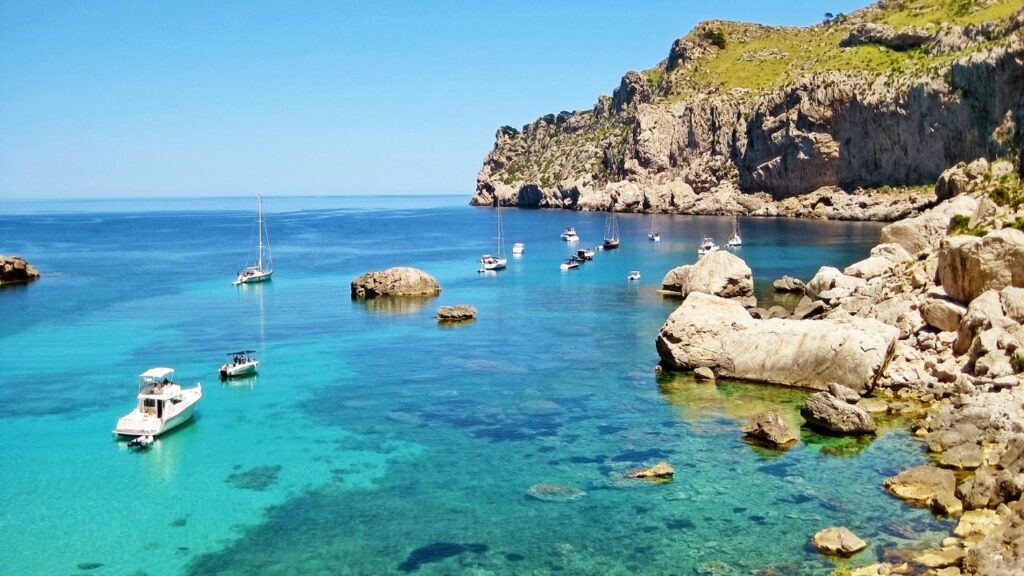
No photo or description can truly capture its charm. It’s a place that must be experienced with all the senses – to smell the sea, to hear the cicadas, and to watch the sun sink into the Balearic sky. Mallorca is a paradise for travellers – full of colours, emotions, and a touch of magic that stays with you long after you return home.
If you’re wondering what to see in Mallorca, prepare yourself for much more than the guidebooks suggest. Here, every place has the power to surprise you.
How to Explore Mallorca – A Practical Itinerary and Map of Attractions
Without unnecessary introductions, let’s get straight to the point – exploring Mallorca. All the additional practical information and useful links are woven into the text to make planning your trip simple and convenient.
The Best Ways to Get Around the Island
From a practical perspective, the best way to explore the island is by hiring a car. Mallorca is relatively small, yet the attractions truly worth visiting are spread out – often located in the mountains, near scenic viewpoints, or in charming hidden villages. Buses run regularly and are comfortable, but they don’t reach many of the island’s highlights, and the most breathtaking views are difficult to experience without your own transport.
I’ve dedicated a separate post to a reliable and affordable car rental company:
👉 Car hire without a credit card or deposit – Spain, Mallorca.
Some people claim that Mallorca is an excellent place to explore by bicycle. However, unless you’re a professional cyclist prepared for mountain climbs, sightseeing by bike can quickly become quite a challenge. For the average visitor, a bicycle is best suited for a leisurely ride along the seafront promenade of Palma de Mallorca – here you’ll find a long, flat, and comfortable cycle path, perfect for recreation.
Exploring the island by train is, in practice, almost impossible. Mallorca’s railway operates mainly as a tourist attraction rather than a practical means of transport for planned sightseeing.
As for accommodation, it’s most convenient to stay in or near Palma de Mallorca. Why? The entire island is best connected through Palma – all major roads either start from or lead to the city. This makes it easy to reach any part of the island quickly, saving time and allowing you to spend it where it truly matters – sightseeing, discovering hidden gems, and enjoying the attractions. Of course, staying in other parts of the island also has its advantages, but it requires being prepared for longer drives and a bit more logistical planning.
How Many Days Do You Need to Explore Mallorca?
When planning a trip to Mallorca, it’s worth carefully considering how much time you want to devote to sightseeing. The island may be small, but it offers so many attractions – from the mountain trails of the Serra de Tramuntana to charming villages and towns, stunning beaches, and natural reserves – that a one-day visit will only let you scratch the surface.
For a complete experience, I recommend spending at least 4–5 days on the island. This allows enough time to visit the main attractions, combine city sightseeing with beach relaxation, and get a real feel for the atmosphere of the local villages. If you plan to include mountain hikes, boat trips around the Cabrera archipelago, or visits to the Drach Caves, it’s best to stay for a week or longer.
In practice, planning your route from Palma de Mallorca allows you to make the most of your time. Daily excursions around the island are a pleasure when you can return to your base in Palma, from where all the main roads lead to Mallorca’s most significant sites.
Interactive Map of Mallorca’s Attractions
Below, you’ll find a map of Mallorca with its main attractions marked. The numbers on the map correspond to those in the table of contents and section headings, making it easy and intuitive to navigate the guide.
By clicking on the map, you can open it in higher resolution and zoom in to explore individual points in more detail.
You can use the map to create your own sightseeing itinerary, but it’s worth taking a look first at the detailed trip plans I’ve prepared, which you’ll find later in this guide.
Mallorca by Car – The Most Scenic Routes
Exploring Mallorca by car is one of the best ways to truly get to know the island and enjoy its breathtaking landscapes. Mallorca offers numerous picturesque scenic routes, winding mountain roads through the Serra de Tramuntana, hidden coves, and panoramic viewpoints that would be difficult to reach using public transport.
Driving Routes Around Mallorca (with GPS and Viewpoints)
I’ve prepared four diverse driving itineraries that start in or near Palma de Mallorca:
- North-west Mallorca and the western Serra de Tramuntana – winding mountain roads, charming villages, and viewpoints perfect for photos and short walks.
- The north and north-east, Formentor Peninsula – spectacular coastlines, coves, narrow serpentine roads, and iconic lighthouses.
- Eastern Mallorca and the Drach Caves – a combination of nature and history, underground lakes, and medieval towns.
- Palma de Mallorca – urban attractions, the La Seu Cathedral, historic districts, and seaside promenades.
Each route is unique, and the attractions do not overlap between trips. The driving times and distances are planned to allow a relaxed pace – with time to stop at viewpoints, take photos, and enjoy local cafés and restaurants. Even in winter, when days are shorter, each route can be completed comfortably without rushing.
How to Prepare for a Road Trip
- Plan your route in advance and check the locations of attractions on the map.
- Always have an up-to-date GPS or an offline map – it will make navigating mountain roads and small villages much easier.
- When choosing a car, consider comfort on winding roads and opt for a smaller vehicle if you plan to explore narrow mountain routes.
- Bring a bottle of water, some snacks, and a camera – some viewpoints have no facilities or shops nearby.
Use GPS Data!
The GPS coordinates provided for each attraction will make your journey much easier. Simply click on the link next to the coordinates, and your navigation app will automatically generate a route from your current location. Just remember to switch to driving or walking mode if you’re planning to explore the viewpoints on foot.
Try it once, and you’ll see – it’s the simplest and most enjoyable way to explore Mallorca by car, discover its hidden treasures, and savour every moment of your journey.
Tour 1 – North-West Mallorca and the Western Serra de Tramuntana
This driving route allows you to discover the most beautiful corners of north-west Mallorca and the western section of the Serra de Tramuntana, a UNESCO World Heritage Site. The route is ideal for lovers of picturesque landscapes, charming villages, and historic landmarks.
The map below shows the full route – all attractions are arranged in visiting order. If, for any reason, you decide to skip a particular stop, you can easily continue to the next one.
1. Andratx
A town with ancient roots, nestled in a valley at the western edge of the Serra de Tramuntana mountain range.
Main attractions:
- Castell de Son Mas – a 16th-century palace that now serves as the town hall.
- Santa Maria de Andratx – a Gothic church built in 1248.
Parking: Available near both attractions.
GPS coordinates for easier navigation:
- Castell de Son Mas: 39.576827, 2.424523 (🔗 navigate)
- Santa Maria de Andratx: 39.577365, 2.421429 (🔗 navigate)
2. Port d’Andratx
A picturesque port town surrounded by mountains. Features a fishing port and a luxury marina, numerous seafood restaurants, beautiful beaches, and a charming waterfront.
Parking: On-street in designated areas
GPS: 39.543818, 2.387079 (🔗 navigate)
3. Sant Elm
A peaceful fishing village perched on a cliff, with stunning views and a small beach. Perfect for relaxation and a short seaside walk.
Parking: On-street
GPS: 39.579791, 2.350650 (🔗 navigate)
4. Mirador de Ricardo Roca
One of the most spectacular viewpoints on the western coast. From the terrace, you can enjoy panoramic views of the bay and Cala d’Estellencs beach.
Parking: At the viewpoint
GPS: 39.645181, 2.451023 (🔗 navigate)
5. Estellencs
A small stone village clinging to the mountainside. Narrow, steep streets and traditional architecture. An excellent place to experience the authentic atmosphere of Mallorca.
Parking: On-street
GPS: 39.653429, 2.481849 (🔗 navigate)
6. Mirador de Ses Animes
A viewpoint featuring the 16th-century defensive tower, Torre del Verger. Offers fantastic views of the coast and surrounding mountains.
Parking: At the tower
GPS: 39.683317, 2.500360 (🔗 navigate)
7. Banyalbufar
A village surrounded by thousands of agricultural terraces dating back to the 10th century, created by the Moors. A perfect spot for a walk and photographing traditional architecture amid the mountains.
Short-term parking: 39.686647, 2.512903 (🔗 navigate)
Long-term parking: 39.686915, 2.510603 (🔗 navigate)
8. Valldemossa
A charming town once home to Frédéric Chopin. Visit Chopin’s cell in the monastery and wander the narrow, cobbled streets.
Parking in Valldemossa: 39.710949, 2.621181 (🔗 navigate)
Monastery with Chopin’s cell: 39.709350, 2.622530 (🔗 navigate)
9. Son Marroig
The residence of Archduke Ludwig Salvator, featuring a marble rotunda and a viewpoint. Offers breathtaking views of Mallorca’s western coast.
Parking: 39.751329, 2.629290 (🔗 navigate)
10. Deia
A picturesque artists’ village, known for visits from Robert Graves, Pablo Picasso, and David Bowie. Walking through Deia allows you to feel the unique artistic atmosphere of Mallorca.
Parking: 39.748453, 2.648859 (🔗 navigate)
11. Port de Sóller
A charming port surrounded by mountains, with numerous bars and restaurants. Ideal for a short coffee or snack break.
Parking: 39.795621, 2.698635 (🔗 navigate)
12. Sóller
Known as the Orange Valley. Features orange groves in the town centre and traditional architecture. A walk through Plaça de sa Constitució is a perfect way to end the day.
Parking: 39.768412, 2.714774 (🔗 navigate)
Town square (Plaça de sa Constitució): 39.766355, 2.715235 (🔗 navigate)
Watch the video of the historic tram ride from Sóller to Port de Sóller:
This itinerary combines mountain landscapes, picturesque villages, and coastal views, while also uncovering lesser-known corners of western Mallorca. The driving times and order of attractions are planned to allow a relaxed pace, giving you the opportunity to take photos and enjoy breaks in local cafés.
Tour 2 – North and North-East Mallorca, Serra de Tramuntana, and Formentor Peninsula
This driving route allows you to discover the most spectacular landscapes of northern and north-eastern Mallorca, including the impressive Serra de Tramuntana mountains and the scenic Formentor Peninsula. The itinerary is perfect for nature lovers, fans of dramatic vistas, and hidden coastal coves. All attractions are listed in visiting order, but if you skip a stop, you can easily continue along the route.
13. Fornalutx
A charming village considered one of the most beautiful in Spain. Narrow cobbled streets, traditional architecture, and lush vegetation create an unforgettable atmosphere.
Parking in Fornalutx: GPS: 39.781241, 2.740456 (🔗 navigate)
14. Sa Calobra Road (MA-2141)
One of the most spectacular roads in Mallorca, known as the “Nudo de la Corbata” – a tie-knot-shaped bend. The 13 km route is full of sharp turns and panoramic views. Driving it is thrilling and offers breathtaking mountain scenery.
- 300-degree bend (Nudo de la Corbata) – Parking: GPS: 39.832087, 2.816003 (🔗 navigate)
- Rock pass – Parking: GPS: 39.845234, 2.799604 (🔗 navigate)
15. Cala Tuent
A small, quiet seaside village with a beautiful, wild beach. A perfect spot for a short rest after the exciting drive along Sa Calobra Road. Bring some snacks, as there are no shops.
Parking by the beach: GPS: 39.840834, 2.776601 (🔗 navigate)
16. Port de Sa Calobra
A striking bay with deep sapphire-blue water, surrounded by steep cliffs. The drive to the port is an attraction in itself, and once there, you can take photos, relax, or take a boat trip to the Torrent de Pareis gorge.
Parking: GPS: 39.847722, 2.798464 (🔗 navigate)
17. Torrent de Pareis
The largest gorge in Mallorca, ending at the beach with dramatic rocky gates. The trail begins at Port de Sa Calobra and passes through a tunnel carved into the rock. Exercise caution at the gorge’s mouth due to strong waves.
Access on foot from Port de Sa Calobra: GPS: 39.851509, 2.806705 (🔗 navigate)
18. Mirador Es Colomer
A viewpoint on the Formentor Peninsula offering panoramic views of the sea and surrounding coast. The terraces provide countless spots for photography and admiring the scenery. Caution is advised for those with a fear of heights.
Parking at the viewpoint: GPS: 39.928971, 3.110590 (🔗 navigate)
19. Faro de Formentor
A lighthouse at the tip of the Formentor Peninsula. The scenic approach and spectacular views, especially at sunrise and sunset, make it an ideal spot to end a day full of experiences and capture the best landscapes of northern Mallorca.
Parking at the lighthouse: GPS: 39.961326, 3.211989 (🔗 navigate)
This route combines wild coastlines, the Serra de Tramuntana mountains, and spectacular viewpoints. It is ideal for drivers who enjoy panoramic routes, photography enthusiasts, and travellers seeking to explore less-known yet incredibly charming corners of the island. The driving times and order of attractions are planned to allow a relaxed pace, with stops for photos, rest, and sampling local treats.
Tour 3 – Eastern Mallorca: Drach Caves, Capdepera, and Artà
This driving route takes you through the eastern part of Mallorca, combining the fascinating rock formations of the Drach Caves with charming historic towns such as Capdepera and Artà. The itinerary is perfect for nature lovers, history enthusiasts, and those seeking spectacular landscapes while exploring less crowded yet incredibly scenic corners of the island.
20. Drach Caves
The Drach Caves are among the largest and most impressive tourist caves in the world, consisting of four connected caves and one of the largest underground lakes. The magical rock formations, illuminated to highlight their fantastic shapes, leave a lasting impression on every visitor.
The caves are accessible by car or organised transport from popular tourist towns. For those without a car, group tours with hotel pickup and entrance tickets are available.
Parking at Drach Caves: GPS: 39.535843, 3.330819 (🔗 navigate)
🔗 Check the latest tours to Drach Caves
21. Capdepera
A historic town featuring a fortified castle with medieval origins. The highest point is the terrace near the Capilla de Nuestra Señora de la Esperanza, offering panoramic views of the coast and, on clear days, all the way to Menorca. Wandering the narrow streets and cobbled squares gives a true sense of Mallorca’s past.
Parking in Capdepera: GPS: 39.701385, 3.434008 (🔗 navigate)
22. Artà
A charming town with a medieval old town, where narrow streets, stone houses, and atmospheric squares create an unforgettable landscape. Key attractions include:
- Gothic Cathedral of Sant Salvador – a magnificent example of ecclesiastical architecture.
- Castle and Santuari de Sant Salvador – a medieval fortress with defensive walls offering panoramic views of the surrounding hills and town.
Walking along the castle walls provides unique photographic opportunities, and the town’s historical atmosphere captivates every traveller.
Parking in Artà: GPS: 39.696319, 3.352932 (🔗 navigate)
This route combines Mallorca’s natural wonders with the historic towns of the eastern part of the island. The Drach Caves offer unforgettable visual and photographic experiences, Capdepera delights with its medieval charm, and Artà blends history with the appeal of local architecture. It is ideal for those who want to combine nature and cultural sightseeing on Mallorca.
Tour 4 – Palma de Mallorca: A City of History, Culture, and Art
Palma de Mallorca is the heart of the island – a city that blends rich history, spectacular architecture, and modern culture. Thanks to the Hop-On Hop-Off system, exploring the capital is simple and comfortable. Buses run every 20–25 minutes, allowing you to stop at all major attractions and explore at your own pace.
The route includes 18 stops, covering historic squares, seafront boulevards, museums, and scenic viewpoints. A one-day ticket can be purchased online and is valid for 24 hours, offering complete flexibility.
🔗 Buy tickets online – Palma de Mallorca Hop-On Hop-Off
23. Joan Miró Museum
The museum showcases the life and work of Joan Miró, one of the greatest 20th-century artists. It houses his paintings, sculptures, as well as his private studio and home. Visiting the museum provides a unique combination of modern art and the local flavour of Mallorca.
Parking at the museum: GPS: 39.555241, 2.610271 (🔗 navigate)
24. Castell de Bellver
A unique 14th-century circular fortress situated on a hill overlooking Palma’s port. Castell de Bellver has served as a royal residence and prison. Today it is well preserved and offers panoramic views of the city and sea. A perfect spot for photography and walks along historic walls.
Parking at Castell de Bellver: GPS: 39.562886, 2.619801 (🔗 navigate)
25. Catedral de Mallorca
Palma’s Gothic cathedral is a jewel of sacred architecture, famous for its impressive stained glass and unique rose window light composition. On selected Catholic holidays (2 February and 11 October), the sunlight creates a remarkable visual effect inside the cathedral. A must-see for any history or architecture enthusiast.
Underground parking: GPS: 39.565334, 2.647732 (🔗 navigate)
26. Plaza Mayor
The city’s heart – a central square that has served as the centre of urban life for centuries. Historically, it housed the San Felipe Neri Monastery and Spanish Inquisition institutions. Today, Plaza Mayor is bustling with cafés, restaurants, and underground shopping arcades. A perfect place to rest while exploring Palma’s centre.
Location Plaza Mayor: GPS: 39.571391, 2.651760 (🔗 navigate)
Exploring Palma allows you to experience the capital fully – from historic monuments and art galleries to atmospheric squares and promenades. The Hop-On Hop-Off system enables sightseeing at a comfortable pace, and clearly marked attractions make the journey enjoyable and stress-free.
Beaches and Nature of Mallorca – Perfect Spots for Relaxation and Connection with Nature
While exploring Mallorca, it is worth setting aside time to relax on the beaches and enjoy the island’s extraordinary natural environment. Below are some of the most beautiful beaches and a unique natural reserve. Each location offers panoramic views, crystal-clear waters, and the opportunity to combine sightseeing with relaxation.
27. Cala Pi Beach
Nestled in a rocky cove, Cala Pi is an intimate beach perfect for those seeking peace and quiet. White sand, turquoise waters, and surrounding cliffs create a picturesque landscape.
Parking: Street parking near the beach access
GPS: 39.363338, 2.836790 (🔗 navigate)
28. Es Trenc Beach (Cala Es Trenc)
One of Mallorca’s most famous beaches – long, sandy, and partly paid. Ideal for relaxing away from crowds during peak season. Es Trenc is often chosen by photographers due to its crystal-clear waters and natural dunes.
Parking: Large beach car park
GPS: 39.339870, 2.993402 (🔗 navigate)
29. Caló del Moro Beach (Moro)
A small, charming beach tucked among rocks, known for its stunning views and tranquil atmosphere. Perfect for photography and a short rest during a tour of the east coast.
Parking: Along the access road (look for available spaces)
GPS: 39.313377, 3.119411 (🔗 navigate)
30. Cala Llombards Beach
Surrounded by rocky coastline, Cala Llombards is a quiet spot with picturesque cliffs and crystal-clear water. Nearby is the Mirador de Es Pontas viewpoint, offering spectacular coastal panoramas.
Parking: Cala Llombards beach
GPS: 39.323277, 3.137562 (🔗 navigate)
Mirador de Es Pontas viewpoint: 39.326072, 3.144193 (Warning: hazardous descents, exercise caution) (🔗 navigate)
31. Cabrera Archipelago National Park
Located south of Mallorca, Cabrera is a protected natural area with extraordinary biodiversity. It encompasses both islands and surrounding waters, home to rare species of flora and fauna.
- Endemic species of lizards and Balearic pigeons can be spotted here.
- Underwater, colourful reefs, fish, and corals make it ideal for snorkeling and wildlife observation.
- Visitors can explore the ruins of Cabrera Castle, formerly used as a prison.
Tours operate seasonally from Mallorca, so it is worth checking current offers.
Mallorca is not just about monuments and towns – the island offers exceptional beaches, rocky coves, and unique natural parks. From Cala Pi to the Cabrera Archipelago, there is a spot for everyone to relax, enjoy active recreation, and connect with nature. Combining sightseeing with time by the water ensures a full, memorable experience on the island.
When is the Best Time to Visit Mallorca – Weather, Seasons, and Climate
Mallorca enchants visitors throughout the year, but choosing the right time for your trip depends on the purpose of your visit. Are you dreaming of peaceful sightseeing, sunbathing, or perhaps active exploration of the Serra de Tramuntana mountain trails? It is worth understanding the characteristics of each season before deciding when to visit this Mediterranean gem.
🌸 Spring – Ideal for Sightseeing and Hiking
From March to May, Mallorca blooms with thousands of almond trees, and temperatures range between 18–25°C. This is an excellent time for walking tours, cycling, and visiting historical sites without the crowds. Hotel prices are still moderate, and while the sea is cooler, it begins to invite the first swims of the season.
☀️ Summer – Full Sun and Peak Tourist Season
From June to September, the island experiences hot, sunny weather. Temperatures can reach 30–35°C, with sea water warming to 25–27°C. This is the perfect season for beach days, evening strolls in Palma, and lively resorts such as Alcúdia, Cala d’Or, or Magaluf. However, expect larger crowds, higher prices, and limited accommodation availability.
🍁 Autumn – Relaxed Atmosphere and Warm Sea
September and October are characterised by warm sea temperatures but significantly fewer tourists. Air temperatures range from 22–28°C, ideal for both beach relaxation and island exploration. Autumn is also a great time for wine enthusiasts, as many regions host local grape harvest festivals.
❄️ Winter – Affordable, Quiet, and Atmospheric
From November to February, Mallorca transforms into a haven for travellers seeking tranquility and authenticity. In Palma, temperatures stay between 12–18°C, while in the mountains, they can drop to 5°C. Winter sightseeing is comfortable, roads are empty, and parking and accommodation are much cheaper. Hotel rates can drop up to three times compared to summer, and car rental costs as little as a few dozen euros per day.
Summary – Best Time to Visit Mallorca
- For relaxed sightseeing: Winter or spring (December–May)
- For beach holidays and swimming: Summer (June–September)
- For active recreation and trekking: Spring or autumn
- For a budget trip: Winter
Regardless of the season, Mallorca offers unique landscapes, picturesque towns, and the deep blue Mediterranean Sea. It is an island that invites repeat visits – no matter the time of year.
How to Get to Mallorca – Flights, Connections, and Airport Transfers
Mallorca, the largest island in the Balearic archipelago, is well connected to most European cities. It is one of the most popular holiday destinations among tourists from Germany, the United Kingdom, and Poland. Thanks to numerous flight connections, reaching the island is fast, convenient, and often very affordable – especially outside the summer season.
Flights to Mallorca – Where to Find the Cheapest Tickets
The most direct connections to Mallorca are offered by major UK airports, including London Gatwick (LGW), London Heathrow (LHR), Manchester (MAN), Birmingham (BHX), and Edinburgh (EDI). From these airports, tickets are often available at very competitive prices, sometimes as low as £30–50 round-trip. During the winter season, several flights operate daily, making these routes highly convenient and cost-effective.
Budget airlines such as Ryanair, easyJet, and Jet2 provide frequent direct flights to Palma de Mallorca, making it easy to plan short or extended trips.
To find the best deals, UK travellers should use flight comparison tools such as Skyscanner, Kayak, or Google Flights. These platforms allow you to compare hundreds of offers, identify the cheapest travel dates, and even set price alerts to catch the lowest fares.
Transfers from Palma de Mallorca Airport (PMI)
Palma de Mallorca Airport (Aeroport de Son Sant Joan) is located just 8 km from the city centre, and transfer to your hotel or other parts of the island is quick and easy.
- Bus A1 – runs from the airport to Palma city centre (Plaza de España)
- Frequency: every 15–20 minutes
- Duration: approx. 20 minutes
- Ticket price: €5
- Bus A2 – runs towards El Arenal and Playa de Palma
- Ideal for those staying on the southern coast
- Taxi or private transfer – journey to Palma city centre costs around €20–25, taking approximately 15 minutes
- Car rental – the best option if you plan to explore the island actively. Car rental companies operate directly at the airport, with off-season rates starting from €15–20 per day, including full insurance.
Alternative – Ferry to Mallorca
You can also reach Mallorca by ferry from mainland Spain. Connections are available from:
- Barcelona – approx. 6–7 hours
- Valencia – approx. 8 hours
- Dénia – approx. 5 hours, with faster services in summer
Ferries arrive at the ports of Palma or Alcúdia. This is a good option for those travelling with a car or motorcycle.
Summary – The Most Convenient Ways to Reach Mallorca
- Cheapest flights: from London (Heathrow, Gatwick)
- Direct flights from UK: available seasonally from major cities
- Airport transfer: Bus A1/A2, taxi, or car rental
- Alternative: Ferry from Barcelona or Valencia
Whichever option you choose, travelling to Mallorca is quick and hassle-free. The island is well prepared to welcome tourists year-round, and Palma airport – one of the most modern in Spain – ensures efficient and comfortable service for all travellers.
Car Rental in Mallorca – How to Choose the Best Deal and Avoid Problems
Travelling around Mallorca by car is undoubtedly the best way to explore every corner of the island – from charming mountain villages to hidden coves and beaches that are inaccessible by public transport. Having your own car gives you complete freedom to plan your route and allows you to experience Mallorca from a completely different perspective.
Why Choose Local Car Rental Companies?
From experience, local rental companies often offer far better conditions than international chains. They frequently provide lower prices, no hidden fees, and simpler rental rules. Additionally, many local companies include full All-Inclusive insurance, meaning you bear no financial risk for minor vehicle damage.
This is ideal for travellers who don’t want to worry about small scratches or bumps while parking. The only exception is driving under the influence of alcohol – in such cases, insurance does not apply.
Trusted Rental – WIBER Rent a Car
During my stay in Mallorca, I used WIBER Rent a Car – one of the most recommended local rental companies on the island. The company enjoys excellent reviews from both Spaniards and tourists from across Europe.
Advantages of WIBER:
- No credit card deposit
- Clear rental and insurance conditions
- Free airport transfer (air-conditioned shuttle every 15 minutes with WIBER logo)
- Fast service and car collection with minimal paperwork
- Modern fleet of vehicles
📍 Location: The rental parking is about 4 km from Palma de Mallorca Airport (PMI). Shuttle transfer takes approximately 7 minutes.
How to Find the Best Car Rental Deals in Mallorca
Before choosing a rental company, it’s worth comparing prices from several providers. A great tool is Rentalcars.com, one of the largest car rental comparison websites in the world. You can check current rates for WIBER and other companies operating on the island.
Prices vary depending on the season, rental duration, and car class:
- Off-season: approx. €17–20 per day (with full insurance)
- Summer season: approx. €30–35 per day
💡 Search for phrases like “car rental Mallorca airport”, “rent a car without credit card Mallorca”, “cheap car hire Mallorca”, or “WIBER Mallorca reviews” to find the most up-to-date and advantageous deals.
Parking in Mallorca – What You Should Know
The island has both free and paid parking. In smaller towns, parking is usually free, while in popular resorts such as Palma, Sóller, or Port de Pollença, fees apply:
- Winter: most parking areas are free and empty
- Summer: fees usually range from €2–5 per hour
⚠️ Note: Do not park in spaces marked with a blue line without a ticket – fines apply.
Summary – Stress-Free Car Rental in Mallorca
- Choose local rental companies with full insurance (All Inclusive)
- Avoid companies requiring high deposits
- Check online reviews – WIBER is a trusted choice
- Book in advance, especially during summer
- Park according to signage to avoid fines
A car is the best way to discover hidden beaches, viewpoints, and mountain routes in Mallorca. With it, you can fully enjoy the freedom to explore the island at your own pace.
Hotel Location and Dining in Mallorca – Where to Stay and What to Eat
Choosing the right hotel location in Mallorca largely depends on your preferences for relaxation and activities. The island offers a wide range of options – from the bustling Palma de Mallorca, to tranquil seaside resorts, and intimate villages in the Serra de Tramuntana mountains.
Palma de Mallorca – The Perfect Base Year-Round
The island’s capital, Palma de Mallorca, is an excellent choice regardless of the season. In winter, life continues at a normal pace – shops, restaurants, cafés, and tourist attractions remain open. This ensures you won’t struggle to find infrastructure or a place for a warm meal.
In summer, Palma is naturally busier, but it offers the best access to public transport, a vibrant nightlife, and a wide variety of hotels – from luxurious five-star properties to smaller, charming guesthouses.
Seaside Resorts – Ideal for a Beach Holiday
If your main goal is a traditional beach holiday, it’s worth considering staying outside the capital. During summer, the farther from Palma, the fewer tourists and the lower the prices. Recommended locations include:
- Alcúdia – perfect for families with children, featuring long sandy beaches and a peaceful atmosphere.
- Cala d’Or – an elegant resort with charming coves and a marina.
- Port de Sóller – a picturesque town with mountain and sea views, ideal for nature lovers.
- Colònia de Sant Jordi – close to the famous Es Trenc beach, perfect for peace and relaxation.
However, in winter most of these places “sleep” – many restaurants and hotels close, so it’s better to stay in Palma de Mallorca or nearby areas (Can Pastilla, Playa de Palma, El Arenal) during the colder months.
Dining in Mallorca – Cuisine for Everyone
Mallorca offers an incredibly diverse cuisine, dominated by fresh seafood, olive oil, local cheeses, and aromatic wines. Seafood lovers will feel like in paradise – dishes worth trying include:
- Paella de mariscos – rice with seafood, a classic Spanish dish.
- Caldereta de langosta – lobster soup, especially popular near Menorca.
- Sobrasada mallorquina – a distinctive pork sausage seasoned with paprika.
- Ensaimada – a sweet spiral-shaped pastry, a symbol of Mallorca.
Due to the high number of German tourists, many restaurants offer German-language menus, and dishes often resemble a classic Polish meal – meat, potatoes or fries, and salad.
To find the best dining options, use search phrases such as best restaurants in Palma de Mallorca, where to eat seafood Mallorca, traditional Majorcan cuisine, or local tapas Mallorca.
How to Find the Ideal Accommodation in Mallorca
To find the best deals on hotels and apartments, use search engines that update prices in real time. They allow you to compare hundreds of offers and choose comfortable hotels at attractive prices.
Check out my guide:
👉 Cheap Hotels on Booking? Absolutely! Learn How to Find Comfortable and Affordable Stays!
In the guide, I explain practical filtering and sorting methods to help you find the best deals in popular European cities – from Barcelona, through Rome, to Mallorca.
- Winter: best to stay in Palma or its surroundings – everything is open and prices are lower.
- Summer: choose seaside resorts to enjoy peace and proximity to the beach.
Local cuisine combines Mediterranean flavors with Spanish and German influences – there is something for everyone.
It is advisable to book accommodation in advance, especially in July and August.