Are you wondering what to see in Sardinia and which places truly make the biggest impression? This island can surprise you – not only with its views, but also with the pace at which it encourages you to explore. It is not a destination that can be “done” in a few days. Sardinia demands you slow down.
I arrived here without particularly high expectations. I knew it would be beautiful, but I did not expect that just the first few kilometres after leaving the airport in Olbia would completely change the way I look at travel. Everything here feels calmer, more natural – as if the island consciously resists haste.
The first thing that captures attention is the light. Sharper than in mainland Italy, intense, reflecting off the rocks and the sea in a way that makes the colours seem almost unreal. The water is not simply blue – it shifts from emerald near the shore to deep navy further out at sea.
The second element is space. Even in popular locations, it is easy to find silence. Just a few minutes away from the main spots are enough to reach coves where, for a long moment, there is no one around. It is there that Sardinia reveals its most authentic face.
Travelling across this island is not about ticking off attractions. It is more about gradually immersing yourself in its rhythm – from elegant resorts, through wild beaches, to places where the only sound is the wind and the sea.
In this guide, you will find the 10 most beautiful places in Sardinia – from spectacular beaches, through historic towns, to less obvious corners that still remain outside the main tourist flow.
1. Costa Smeralda – luxury and the most beautiful sea colours in Sardinia
Costa Smeralda is one of the most recognisable places in Sardinia – a region that combines spectacular landscapes with a touch of luxury. On one hand, elegant resorts, marinas filled with yachts, and carefully designed architecture; on the other, a wild coastline and bays that look as if they have remained unchanged for centuries.
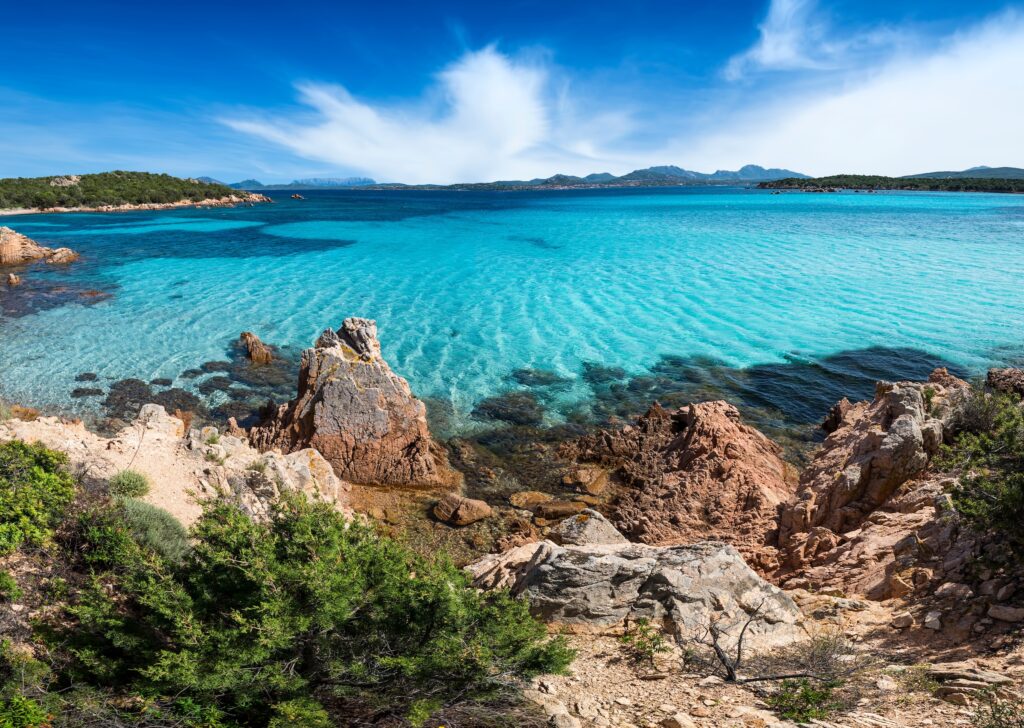
The first impression can be slightly misleading. The surroundings of Porto Cervo give the feeling of a perfectly designed space – pastel-coloured buildings, orderly streets, and an exclusive atmosphere create an almost cinematic setting. However, just a few minutes’ drive is enough to find yourself in a completely different world – more raw, natural, and significantly quieter.
It is there that Costa Smeralda reveals its true character. The coastline begins to break into small coves, while rocks and Mediterranean vegetation form a landscape that is difficult to compare with anywhere else in Europe.
The sea, however, makes the strongest impression. The colour of the water changes here almost every few metres – from light, almost transparent turquoise near the shore, through intense emerald, to deep blue further out. Depending on the light and time of day, each shade looks different, which means that even a short stay by the water offers a constantly changing experience.
Contrary to popular belief, Costa Smeralda is not reserved exclusively for luxury holidays. With a bit of patience, it is easy to find less frequented beaches and coves where the only company is the waves, the wind, and the distinctive scent of Mediterranean maquis.
The best time to visit is early morning or late afternoon. The light is then softer, the colours more saturated, and most tourists have either not yet arrived or have already left the beaches. It is precisely then that Costa Smeralda reveals its calmer, more authentic side.
Practical information
📍 Access: best by car from Olbia (approx. 30–40 minutes)
⏱ Visiting time: from a few hours to a full day
💡 Tip: it is worth leaving the main roads and exploring smaller coves – they are often much more beautiful than the most famous beaches
2. La Maddalena Archipelago – the paradise islands of Sardinia
The La Maddalena Archipelago is one of those places that redefines your perception of the Mediterranean Sea. If you are wondering what to see in Sardinia beyond classic beaches, this region should be at the very top of your list.
Even the departure from the port of Palau already changes your perspective. The mainland quickly disappears on the horizon, and in front of you appears a mosaic of islands, rocks, and sandy coves in colours that more closely resemble the Caribbean than Europe.
The archipelago, protected as a national park, has largely preserved its natural character. Each island is different – from harsh, rocky formations to gentle sandy beaches surrounded by low vegetation. As a result, the landscape is constantly changing, and the boat trip becomes not a single experience, but a sequence of very different views.
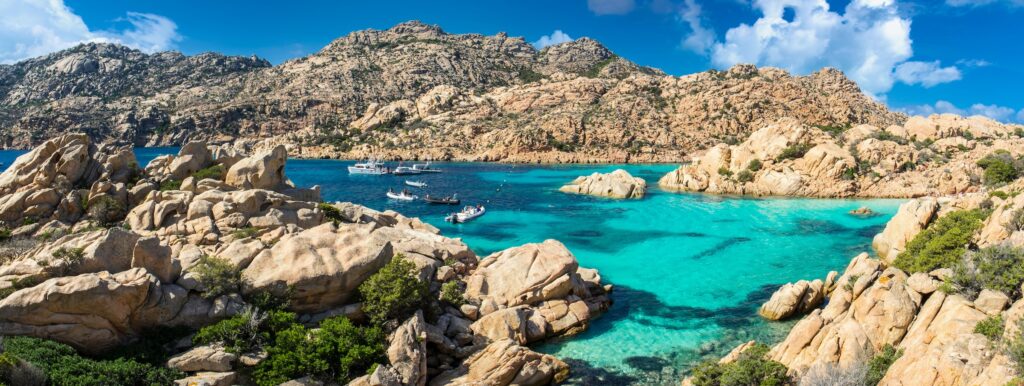
The most distinctive element is the water. In many places it is so clear that the seabed is visible from a great depth, and the boat seems to float in the air. Shades of turquoise, blue, and emerald blend depending on light and depth, creating an effect that is difficult to capture in photographs.
During stops in smaller bays, it is easy to feel how different this place is from typical resorts. Silence, lack of development, and minimal human impact make the archipelago retain its wild character. Just sailing a little further away from the most popular routes is enough to find areas that are almost completely empty.
Despite its popularity in the summer season, its greatest advantage is precisely the availability of “hidden” spots. It is one of the few places in Sardinia where even at peak season you can find coves that feel completely cut off from the world.
A cruise around the archipelago is not just a tourist attraction, but an experience that allows you to see Sardinia from a completely different perspective – more primal, peaceful, and almost untouched by modern life.
Practical information
📍 Access: port in Palau + boat cruise or private boat rental
⏱ Visiting time: half a day or a full day
💡 Tip: choose a smaller boat or a more intimate tour – it allows access to less reachable coves and helps avoid crowds
3. Cala Goloritzé – one of the most beautiful beaches in Sardinia
Cala Goloritzé is not a place you stumble upon by accident. If you are wondering what to see in Sardinia beyond easily accessible beaches, this cove is one of the most exceptional spots on the island.
Reaching it requires effort – and that is exactly what makes the experience so intense. The journey usually begins at the Su Porteddu parking area, from where a hiking trail descends through a raw, limestone landscape. The route is not very long, but the sun, rocky ground, and lack of shade quickly make the effort noticeable.
With every step, the surroundings change. Vegetation gradually gives way to pale rock, and the scent of the sea becomes increasingly distinct in the air. The moment when the trail suddenly opens up to reveal the bay is one of the most unforgettable on the entire island.
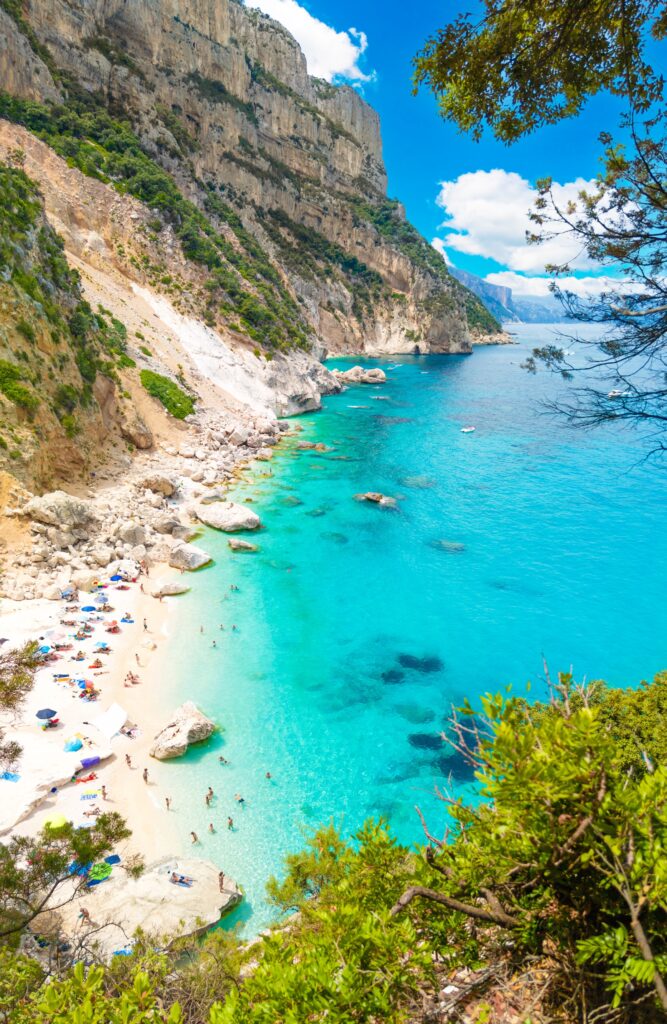
Cala Goloritzé impresses from the very first glance. The water here has an extraordinary colour – a combination of turquoise and milky blue – and its clarity allows you to see the seabed even at a greater depth. The whole scene is surrounded by high white cliffs, giving the place a monumental character.
The most recognisable feature of the landscape is a slender, needle-like rock rising from the sea. It creates one of the most iconic views in Sardinia and makes the cove look even more spectacular in reality than in photographs.
There is no typical tourist infrastructure on site. No bars, no sunbeds, no loud music – only silence, broken by the sound of waves and nature. Thanks to this, Cala Goloritzé preserves its raw, almost untouched character.
This is not a beach for a short stop. It is a place that requires commitment, but in return offers one of the most authentic experiences in Sardinia.
Practical information
📍 Access: Su Porteddu parking + hiking approx. 1.5 hours downhill
⏱ Visiting time: half a day (including return)
💡 Tip: bring plenty of water and proper footwear – no shade and a demanding uphill return
4. Cala Luna – a wild bay with caves on the eastern coast of Sardinia
Cala Luna is one of those places that combines a spectacular landscape with a sense of adventure. If you are wondering what is worth seeing in Sardinia beyond classic beaches, this cove offers much more than just a view.
Getting there is part of the experience. You can arrive by boat or choose a hiking trail through the mountains of the Supramonte region. The land route leads through a harsh, rocky terrain where low vegetation and open space enhance the feeling of isolation from civilisation.
The most distinctive moment comes just before arrival. You can already hear the sound of the sea, but the beach is still out of sight. This anticipation makes the first view of Cala Luna particularly powerful.
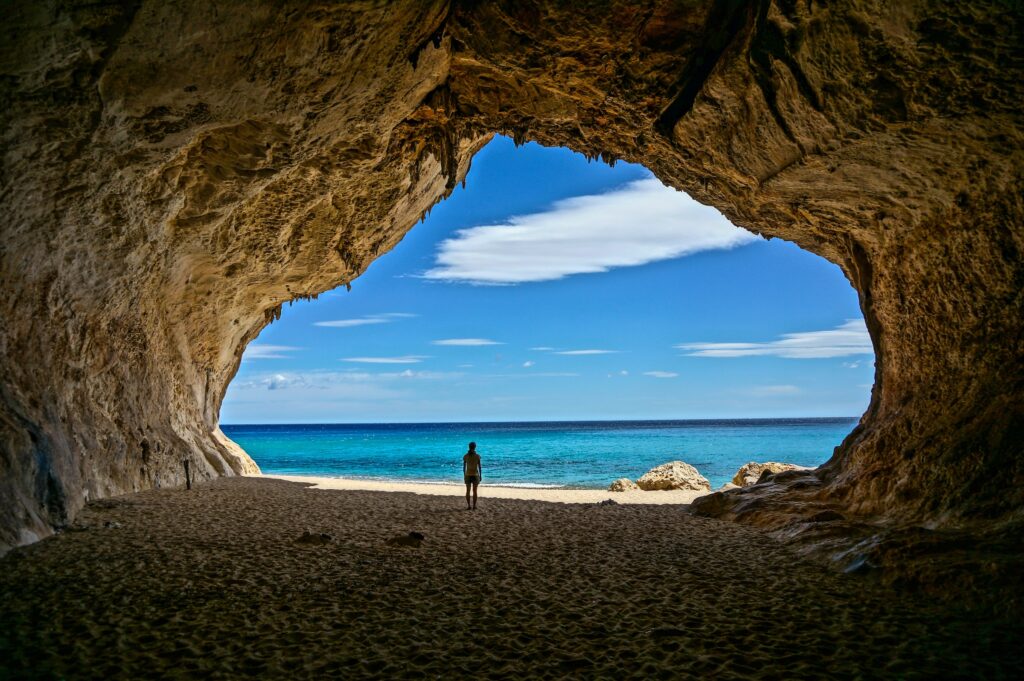
The bay opens wide, forming a natural crescent surrounded by high limestone cliffs. The pale sand contrasts with the raw rock walls, giving the place a monumental atmosphere.
The most recognisable feature is the caves carved into the rocks right by the beach. On hot days they provide natural shade and a refreshing coolness, becoming the perfect shelter after the mountain hike. Inside, semi-darkness creates a strong contrast with the intense light reflected from the sea.
The water in Cala Luna is extremely clear and dynamic. In the morning it is often calm and glassy, at midday it becomes more vividly blue, and in light wind it gains a more energetic character without losing clarity.
Despite its popularity, the beach does not feel overcrowded. The space is large enough for everyone to find their own spot – either by the water or in the shade of the caves. Cala Luna does not impose how you should spend your time; instead, it allows you to naturally adjust your pace.
This is a place that combines accessibility with wildness – and it is precisely this balance that makes it one of the most distinctive coves in Sardinia.
Practical information
📍 Access: hiking from Cala Fuili trail (approx. 2 hours) or boat from Cala Gonone
⏱ Visiting time: half a day or a full day
💡 Tip: if hiking, start early in the morning – the return in full sun can be demanding
5. Grotta di Nettuno – an underground cathedral above the Mediterranean Sea
Grotta di Nettuno is one of the most impressive places on Sardinia’s north-western coast, where nature has created a space of an almost sacred character. If you are wondering what to see in Sardinia beyond beaches, this cave should be at the very top of your list.
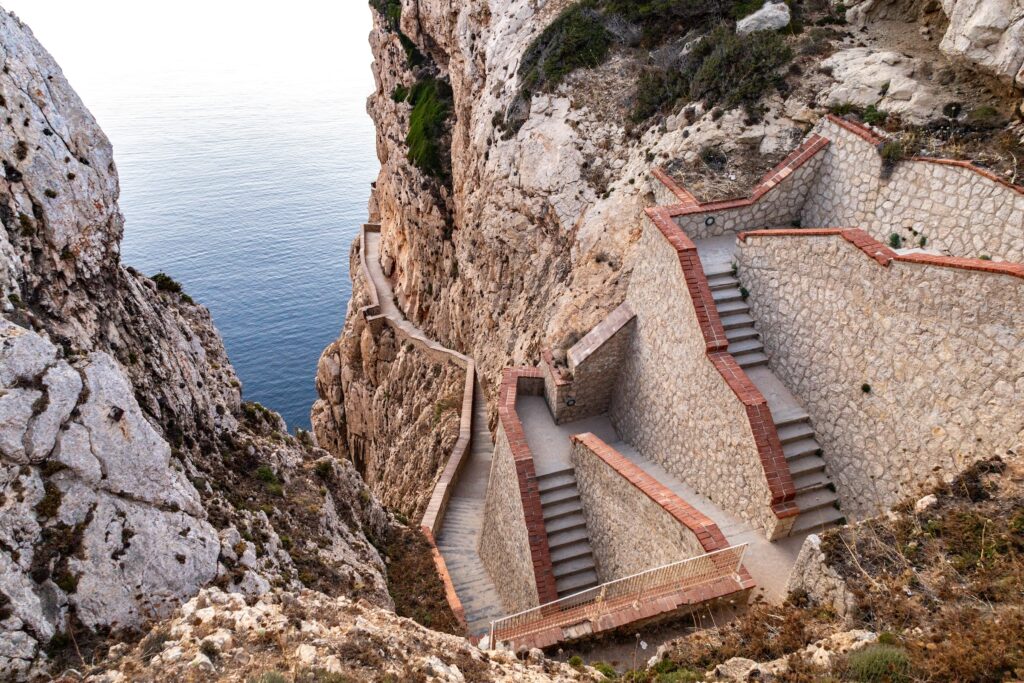
Reaching the grotto is an experience in itself. The most famous route follows the Escala del Cabirol – stairs carved into the steep cliffs of Capo Caccia. Each step down reveals a wider and wider view of the open sea, which from this perspective appears calm and endless. The alternative is a boat trip, which allows you to see the monumental entrance to the cave directly from the water.
The moment you cross the threshold of the grotto, the perception of the surroundings changes noticeably. The temperature drops, the light becomes softer, and outside sounds gradually fade away. The interior opens into vast chambers and corridors that resemble architecture more than natural rock formations.
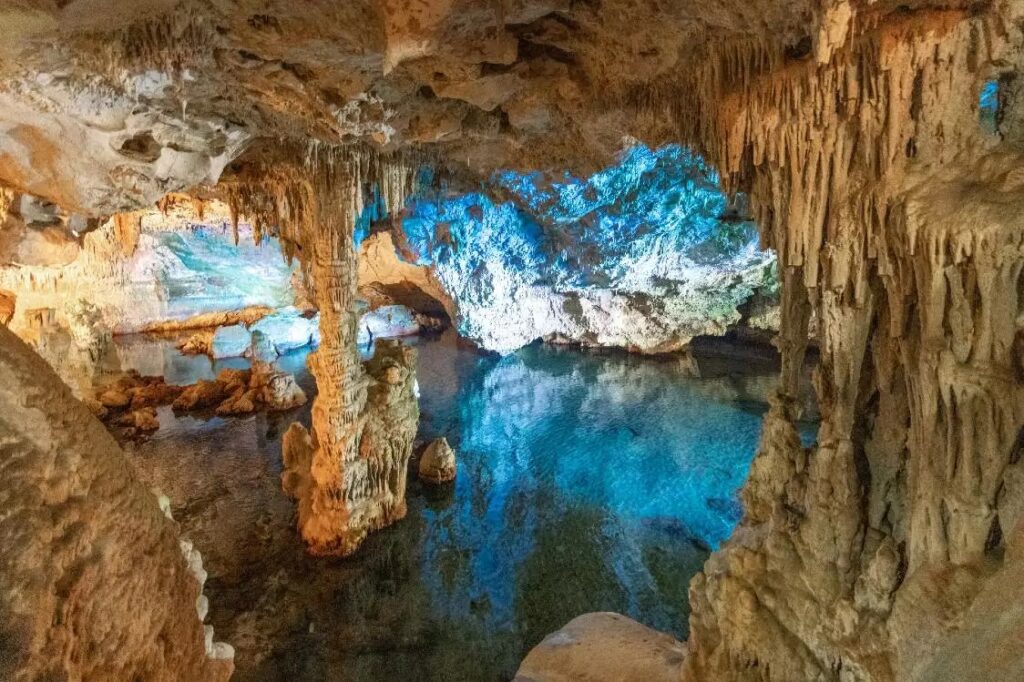
The scale of the place is truly impressive. High vaults, natural columns, and formations of stalactites and stalagmites create a complex structure shaped by thousands of years of geological processes. In many areas, the rock formations merge into monumental “colonnades”, giving the interior an almost cathedral-like character.
Light plays a particularly important role here. Subtle illumination highlights the texture of the rock and reveals its depth, while reflections in the water create delicate, shifting effects. It is precisely this interplay of light and shadow that makes the interior of the cave change with every step.
The silence here is not imposed – it arises naturally from the space itself. Visitors instinctively move more slowly and speak more quietly, adjusting to the atmosphere of the place. Grotta di Nettuno does not encourage haste, but rather observation and reflection.
This is not only a tourist attraction, but also one of those places in Sardinia that allow you to see the island from a different perspective – not as a coastal landscape, but as an area with a deep geological history hidden beneath the surface.
Practical information
📍 Access: Escala del Cabirol stairs from Capo Caccia or boat trip from Alghero
⏱ Visiting time: approx. 1–2 hours
💡 Tip: the staircase route is the most scenic, but requires good physical condition – consider a one-way boat return
6. Cagliari – the capital of Sardinia best discovered without rush
Cagliari is a city that does not reveal itself immediately. Instead of a spectacular first impression, it offers a gradual discovery of successive layers – from everyday port life, through historic districts, to quiet spaces with sea views. If you are planning to explore Sardinia, it is worth dedicating at least one full day to the capital.
The most distinctive area is the Castello district, located on a hill above the city. Narrow stone streets wind between pale buildings, and every turn opens new perspectives – small squares, viewpoints, and fragments of the harbour panorama. It is a space where it is easy to slow down and simply wander without a fixed plan.
Cagliari shows a strong blend of history and everyday life. Next to ancient walls and churches, there are small shops, cafés, and local markets. The San Benedetto market, in particular, offers a more authentic side of the city – vivid colours, fresh fish, seafood, and regional products create an image of everyday Sardinia far from tourist brochures.
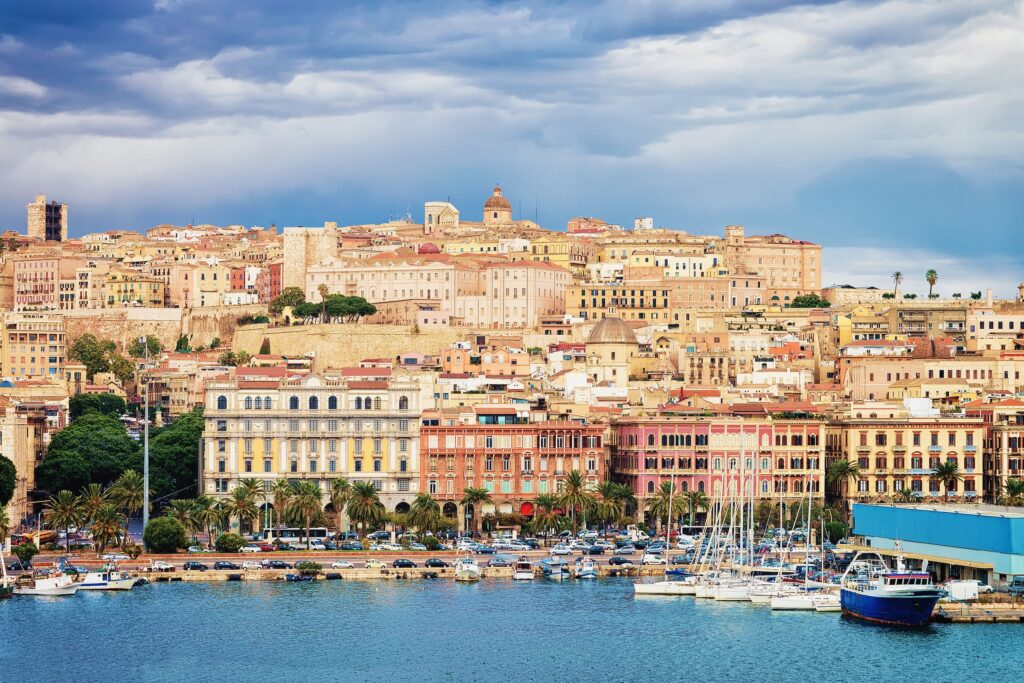
A clear contrast to the historic centre is Poetto Beach, stretching for several kilometres along the coastline. During the day it is lively and dynamic, while in the evening it becomes calmer, with sunset light giving the water and sand soft golden tones. This is when the proximity of Cagliari’s two worlds becomes most evident: urban and natural.
The city does not rely on a single dominant attraction. Its strength lies in its atmosphere and rhythm of life, best experienced through simple walks – without a plan, from one street to another, from a corner café to a viewpoint on the hill.
Cagliari does not compete with Sardinia’s beaches. Instead, it complements them, showing a more urban yet still deeply Mediterranean side of the island.
Practical information
📍 Access: Cagliari-Elmas Airport + public transport or walking
⏱ Visiting time: 1–2 days
💡 Tip: the best time to explore is late afternoon and evening – the light and temperature are most pleasant, and the city gains a unique atmosphere
7. Alghero – a Catalan city in Sardinia
Alghero is one of the most distinctive cities in Sardinia, where strong Catalan influences are immediately noticeable. They give the city a different rhythm and clearly distinguish it from other coastal towns on the island. If you are planning to explore Sardinia, Alghero should be seen not only as a point on the map, but as a place for slow wandering and observing everyday life.
The walled old town makes a strong impression from the very beginning. Narrow cobbled streets run between bright façades, and their layout encourages aimless wandering. On one hand, there is a sense of history; on the other, the normal everyday life of residents unfolds among cafés, small shops, and restaurants.
One of the most distinctive experiences is a walk along the city walls. On one side, there is a maze of the old town; on the other, the open sea, which changes its character depending on the time of day. It is precisely this proximity between architecture and nature that creates Alghero’s unique atmosphere.
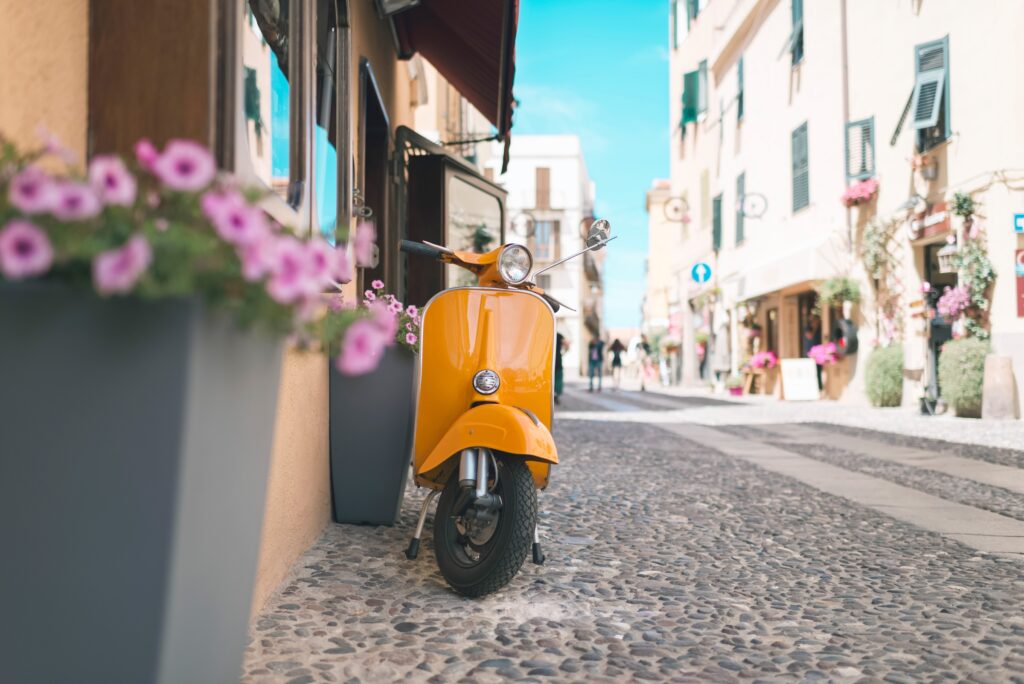
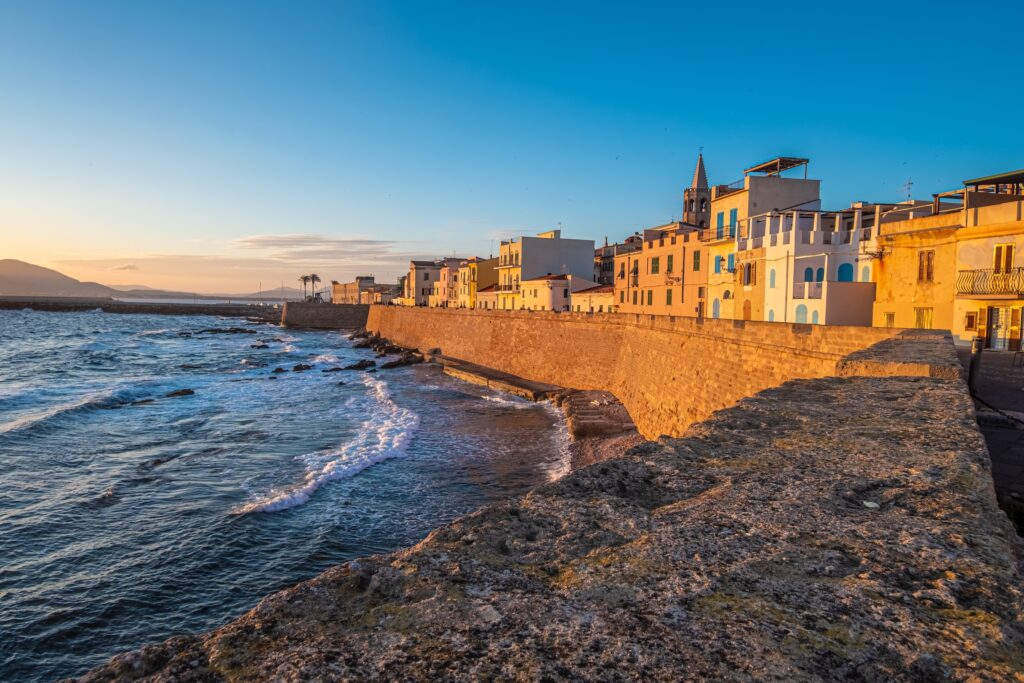
The city is particularly beautiful in the evening. Sunsets over the coastline give the stone buildings warm golden tones, and the entire waterfront becomes a natural promenade. This is the moment when Alghero reveals its most atmospheric side.
It is also worth going slightly beyond the centre. Just a few minutes’ walk are enough to find quieter stretches of coastline and less crowded beaches. At that point, the city loses its more tourist-oriented character and becomes more raw and authentic.
Alghero does not rely on a single dominant attraction. Its strength comes from its atmosphere, history, and the unique blend of cultures that coexist in one space, giving it a truly distinctive identity.
Practical information
📍 Access: Alghero-Fertilia Airport + bus to the city centre
⏱ Visiting time: 1–2 days
💡 Tip: the old town is best explored in the morning or evening – midday can be very hot, and the light is less suitable for walking
8. Bosa – the most picturesque town in Sardinia
Bosa is one of those places that at first glance looks like a perfectly composed scene, although in reality there is nothing artificial about it. Located in the valley of the Temo River, the town impresses with its colourful houses cascading up the hillside, leading the eye all the way to the Malaspina Castle overlooking the entire area.
Even the approach to Bosa is impressive. The road passes through gentle green hills, and the town gradually appears – first as a strip of colours along the river, then as denser buildings climbing upwards. This gradual “reveal” of the landscape makes the first encounter with Bosa particularly memorable.
The old town is best explored on a slow walk. Narrow streets, pastel façades, and soft light reflecting off stone walls create an atmosphere that encourages unhurried discovery of hidden corners. Every turn reveals new perspectives – stairways, small courtyards, fragments of river views, and bridges.
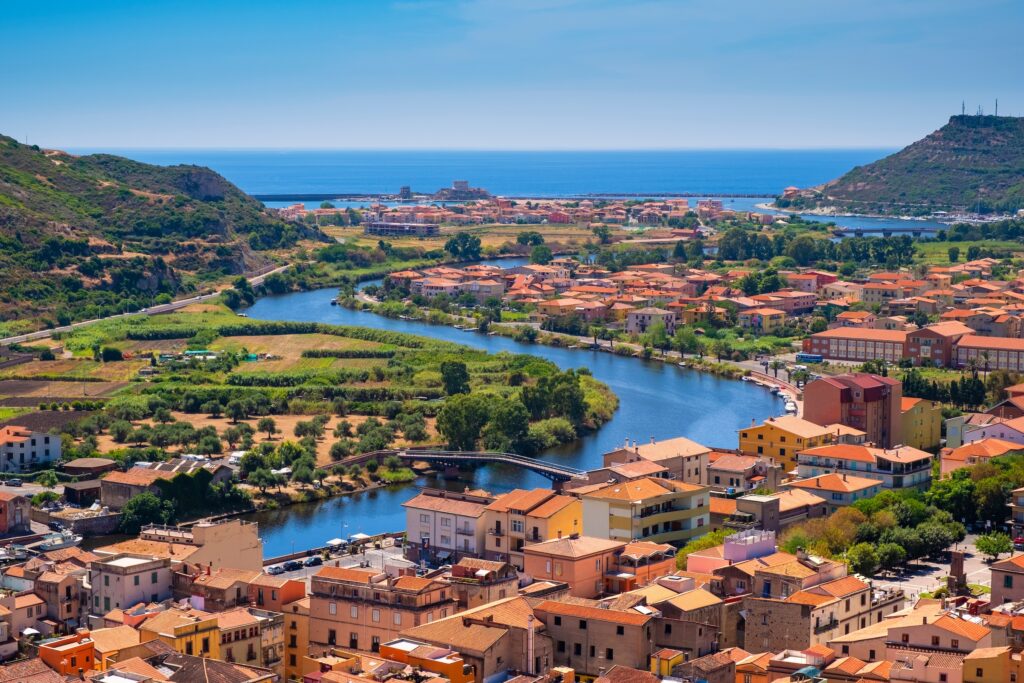
One of the key highlights is Malaspina Castle. The walk up the hill is not demanding, but it gradually changes the surroundings into something more rugged and stone-filled. From the top, there is a panoramic view over the entire valley, where Bosa is at its most impressive – the colours of the houses contrast with the green hills, and the river forms a natural axis of the entire landscape.
It is also worth descending to the river level, where the town takes on a more everyday character. In this part, Bosa is no longer just a postcard view, but a living space where local life unfolds at a calm pace.
Bosa does not impress with scale or spectacular attractions. Its strength lies in harmony – the combination of colour, architecture, river, and surrounding landscape. It is precisely this balance that makes it one of the most photogenic towns in Sardinia.
Practical information
📍 Access: by car from Alghero or Oristano (approx. 1–1.5 h)
⏱ Visiting time: a few hours or half a day
💡 Tip: the best light for photography and walking is in the late afternoon – the colours of the town become most intense at that time
9. Su Nuraxi di Barumini – a journey into the ancient civilisation of Sardinia
Su Nuraxi di Barumini is a place that allows you to see Sardinia from a completely different perspective. An island usually associated with the sea and beaches here reveals a much older history – reaching back to the Nuragic civilisation, which shaped its identity for thousands of years.
Even from a distance, the monumental stone structure makes a strong impression. A raw, massive tower built from unworked limestone blocks dominates the surrounding landscape and appears more like a natural formation than a human construction.
Visiting the complex feels like a gradual immersion into the past. Narrow passages, low corridors, and the multi-level structure lead through a space that requires slowing down and focusing attention. The layout is not intuitive from a modern perspective, which further enhances the feeling of encountering an entirely different culture.
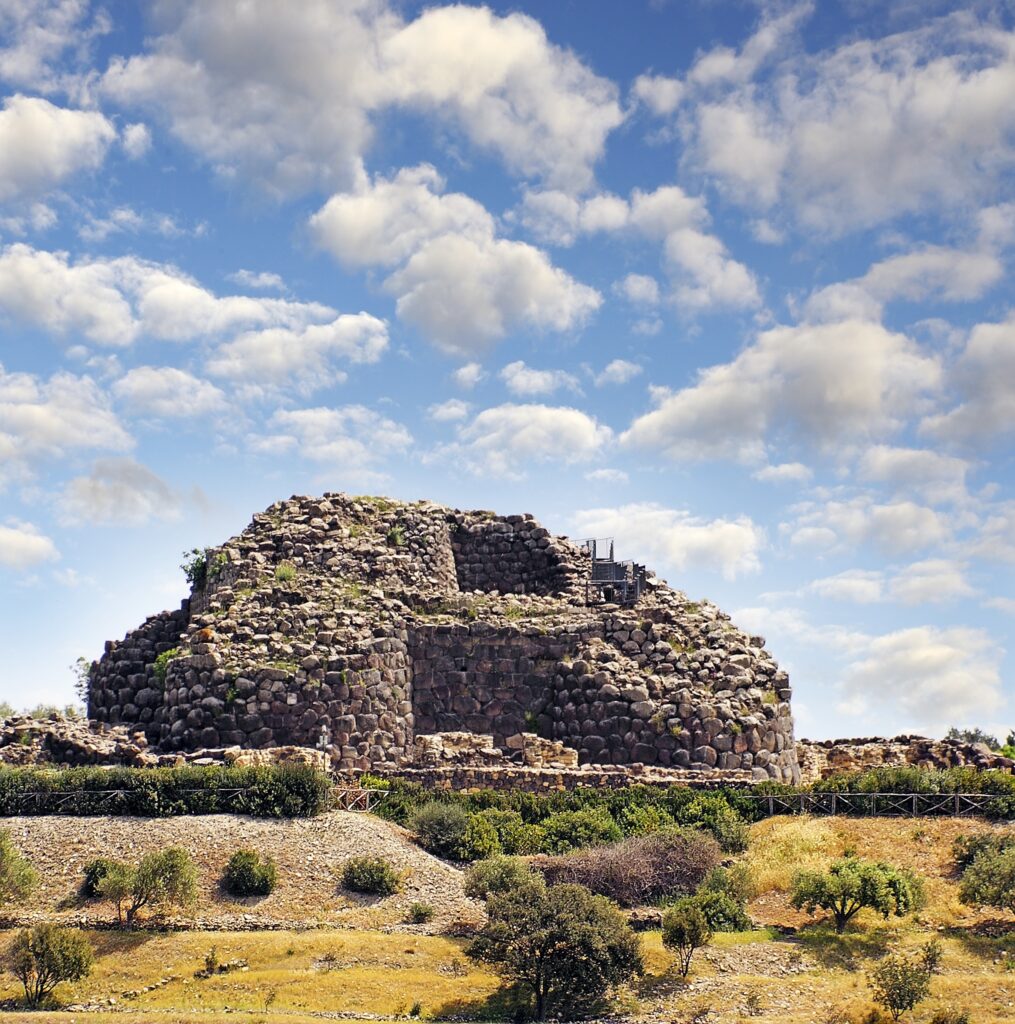
The greatest impression is made by the durability of the construction. Built without mortar, it has survived thousands of years, preserving its form in an almost intact state. Standing inside the main tower, it is easy to appreciate the technical sophistication of this ancient civilisation.
Equally important is the surrounding landscape. The ruins are not hidden in isolation but exist within an open environment where history and modern life intertwine. This contrast helps to better understand the continuity of settlement on the island.
Su Nuraxi is not a typical tourist attraction, but one of the most important reference points in Sardinia’s history. It is a place that helps you understand that the island’s identity did not begin with tourism, but has deep, centuries-old roots.
Practical information
📍 Access: Barumini, approx. 1 h 15 min from Cagliari by car
⏱ Visiting time: 1–2 hours
💡 Tip: it is worth joining a guided tour – without historical context, many elements may be difficult to fully understand
10. Capo Testa – a rocky landscape at the edge of Sardinia
Capo Testa is one of the most extraordinary places on the northern tip of Sardinia, where nature has created a landscape that feels almost otherworldly. Raw granite formations, shaped by wind and water over thousands of years, form a space full of imaginative shapes and natural sculptures.
A first walk across the peninsula quickly shows that this is not a typical viewpoint. The rocks take on forms that spark the imagination – resembling animals, figures, or abstract shapes that change character depending on the light and time of day. At some point, you stop trying to “recognise” them and simply observe their natural variability.
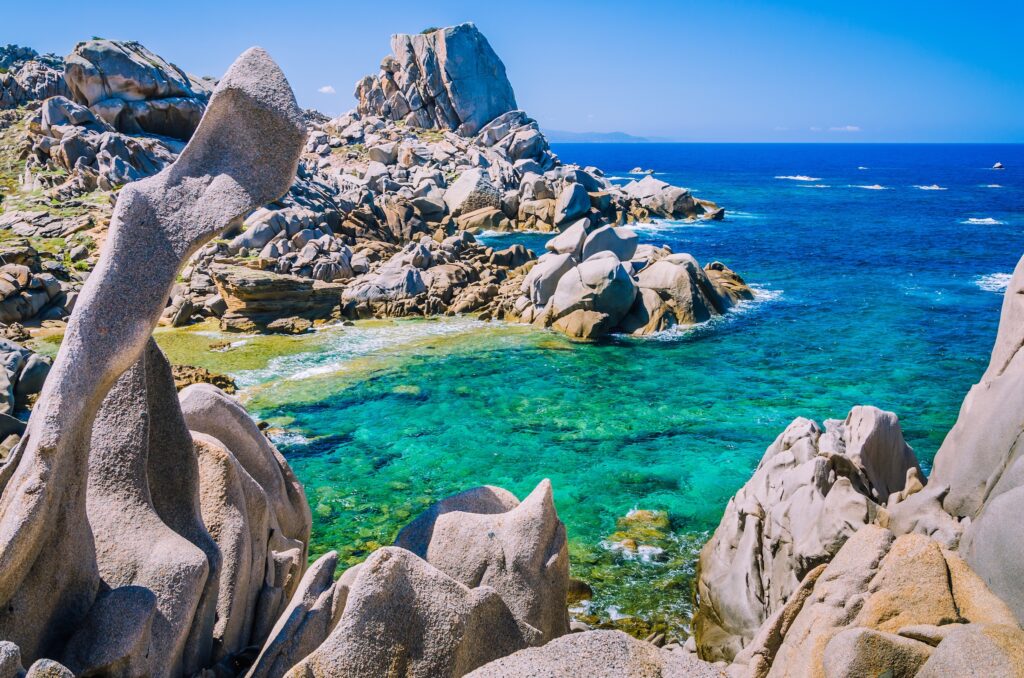
The greatest strength of Capo Testa is the sense of space and silence. Just a short walk away from the main paths is enough to find almost completely empty areas where the only sounds are the wind and the sea crashing against the rocks. It is there that the landscape becomes most raw and authentic.
Small coves hidden between the rocks are particularly memorable. The water has intense, deep shades of blue, and the boundary between sea and sky can become almost indistinguishable. These are places that offer a feeling of being in contact with nature in its most primal form.
Capo Testa does not require a fixed sightseeing plan. It is a space for free exploration, where everyone can discover their own paths and viewpoints. The lack of infrastructure and the natural character of the terrain have allowed it to retain its wildness despite growing popularity.
Practical information
📍 Access: Santa Teresa Gallura, northern Sardinia (approx. 10 minutes by car from the town centre)
⏱ Visiting time: 2–4 hours
💡 Tip: best visited in the late afternoon – the setting sun highlights the most interesting rock formations and sea colours
Practical information – Sardinia in a nutshell
When to go to Sardinia
The best time to travel is May–June and September–October. During this period, the weather is stable, the sea is warm, and the main attractions are either not yet or no longer crowded. July and August are peak season – very high temperatures and heavy tourist traffic.
Transport on the island
The most convenient way to explore Sardinia is by renting a car. Many of the most beautiful places (Cala Goloritzé, Capo Testa, or Su Nuraxi) are difficult to reach by public transport.
- the roads are good, but often winding
- travel times are usually longer than maps suggest
- it is worth booking a car in advance during the high season
Accommodation in Sardinia
The choice of location has a major impact on the experience:
- north (Olbia, Costa Smeralda) – best base for beaches and La Maddalena
- east (Cala Gonone, Orosei) – ideal for trekking and wild coves
- south (Cagliari) – good connections and city life
- west (Alghero, Bosa) – more peaceful atmosphere and sunsets
Prices in Sardinia
Sardinia is not one of the cheapest destinations in Italy, especially in high season:
- accommodation: from moderate to very high prices in Costa Smeralda
- restaurants: reasonable, but more expensive in tourist areas
- car rental: significantly more expensive in July and August
What to bring
- comfortable trekking shoes (many beaches require walking access)
- plenty of water and strong sun protection
- cash (cards are not accepted everywhere)
- snorkeling mask – the water is exceptionally clear
Most important tip
Sardinia is best discovered without rush and without a strict “checklist” approach. Often, the most beautiful coves and viewpoints are found where no main route leads.
Conclusion – a Sardinia that stays in memory
Sardinia is not an island that can be understood in a linear way. It is not made up of a single type of landscape or one dominant experience. It is a space of many layers – from spectacular beaches and hidden coves, through rugged mountain areas, to cities with a strong identity and centuries of history.
Each of the described places reveals a different fragment of the same story. The north impresses with intense colours and the contrast between luxury and wild nature. The eastern coast offers some of the most spectacular beaches in Europe. The island’s interior recalls its ancient roots, while cities such as Cagliari and Alghero show a more everyday, cultural face of Sardinia.
The most important aspect, however, is that Sardinia requires slowing down. It is not a destination for quickly ticking off attractions, but a place that gradually reveals its most interesting layers when you allow it to set its own pace. Silence in the coves, light reflecting off the rocks, and the calm rhythm of life create an experience that is difficult to compare with anywhere else in Europe.